Showing posts with label education. Show all posts

Tuesday, December 9, 2014

The IEP

This post is part of a series about Our Homeschooling Journey. Click here for the conversation that started it all. Click here to read about the S word.

As Tim and I weighed the pros and cons of different educational options for our children, we talked a lot about the purpose of school and education in general and we shared about our personal experiences in school.

We graduated together but I got the fancy cords for doing my homework.

I was a goody-two-shoes straight-A student in high school, Tim was the kid who aced the tests but didn't turn in the homework. I diligently attended even the most boring of classes, Tim found himself skipping classes that weren't interesting or challenging him. We were two very different students. We still are two very different learners. Tim can read a book while watching TV or listening to music and comprehend all of the different stimuli. I need quiet to read and I still struggle sometimes to follow the plot of a complicated movie or TV show.

The truth is, all people are very different. We all come with our own unique abilities, interests, attitudes and needs. I think this is great. It'd be boring if we were all the same. We all have something different to contribute to the world and society needs a lot of different kinds of people to function.

At the time we were discussing homeschooling, Lexi was 4. She was a bright kid. She has always had a strong vocabulary and good communication skills. She had a killer memory (as her mom that can be a good/bad thing for me) and was naturally curious. She was interested in learning to read and enjoyed building things with blocks and creating art. She was one-of-a-kind in our eyes.

She loved drawing as soon as she learned to pick up a pen (with her left hand!)

Which is what made me a bit concerned about sending her to a classroom of 20-30 kids someday. I have a background in education and I understand how challenging it can be for a teacher to cater to the varying needs of so many students. I often saw the bright kids, and sometimes the average kids, get left behind.

Actually, I remember once exercise I did in one of my education courses at KU. We were given a roster of 30 make believe student profiles and had to pick which kids we'd most like to have in our imaginary classroom and which we would least like to have.

Can you guess which kids myself and my fellow future teachers did NOT want in our classrooms?

The gifted kids! I was really surprised at this result. We all chose the struggling kids to have in our classrooms over the children who needed an extra challenge. I know from experience that it can be difficult to come up with challenges for the bright kids in a class, especially when there are some kids struggling to stay caught up.

I remember one student that I student taught who had mediocre grades. He always finished his work quickly and then space off or messed around, sometimes distracting other kids. One day I called him over and asked if he was bored. Yes, he told me adamantly. I told him I would try to come up with something extra for him to do. He came to my desk daily from them on asking if I had something for him.

I don't know if Lexi is gifted. I don't really know what that even means. I know she is smart. I wonder how she would behave in a classroom if she finished all her work. Would she bother the other kids? Read the dictionary in class, like her dad once did? I can't say.

What I can say is that kids who are bored or not kept busy and challenged can begin to feel negatively about school in general. Being bored in school can lead to a disinterest in learning or a squashing of passion.

What is the point of school? To me, school is about education. Education is about learning. In my eyes, the goal of education is to develop knowledge and skills that enrich life and benefit the individual as well as others.

What's the best way to accomplish this kind of knowledge and skill development?

Well, that depends on the person. We're all individuals. What works for one person may not work for another.

In the education world, students who have special needs qualify for an IEP, or Individualized Education Program. Each child's IEP lays out needs, goals, accommodations that will be made for the child and a plan for helping them reach their goals. A team of teachers and staff members meet periodically to monitor how things are going.

I like the idea of the IEP. I think every kid should have one. Does that sound crazy?

I think it's crazy to assume that all the kids in a classroom are the same.

Each child has different abilities, needs, interests and even attention span and energy level that affect her ability to learn. So why not take these factors into consideration?

Well, in a classroom of 30 kids, it would be nearly impossible for one teacher to be able to teach each subject to fit each child's individual differences. That is asking a lot. There are a lot of wonderful teachers out there who do a great job teaching their students to the best of their abilities. Sadly, these teachers often have time constraints and limited budgets as well as mounting responsibilities (state testing, anyone?) that don't always make it possible for them to cater to each student's specific, individual needs.

But, I learned, there is another option.

Homeschooling.

As my child's mom, I am already familiar with many of her quirks. I am aware of her interests, abilities, and I've been taking care of her needs since she entered the world. I get that she is ready to go first thing in the morning but hits an afternoon slump- I do too. I know that she could listen to books for hours on end but that she tires quickly when she's writing.

At the time of this decision, Lexi was only 4. She already showed strengths in some areas and weaknesses in others. She was excited about learning. I didn't want that excitement to fizzle out.  I always knew I wanted to be the one to have the honor of teaching her to read. I got excited about the idea of being the one to teach her other things too. I could create a plan for her education based on her specific needs.

Once homeschooling got into my head, I knew I had to try it out. It seemed to fit. I could teach Lexi at her own pace, following her own interests, which would fulfill my desire to be home with my children yet also exercise my love for teaching. Win-Win.

So when Tim lost his job in the winter of 2013 and we legitimately could not afford preschool any longer, we decided to officially make the plunge into homeschooling.

What a wild ride it has been.

Lexi was very interested in gardening and chose to buy herself a tomato plant

Mushrooms were fascinating to learn about

She loved writing stories

There's nothing quite like dancing in the rain.

Thursday, December 4, 2014

The S Word

This post is part of a series about Our Homeschooling Journey. Click here to read the first post. 

After some research, I realized there were some benefits to homeschooling I had never considered. Tim and I began discussing it as a viable option for our family. We weighed the pros and cons. The biggest issue we were concerned with was socialization. We soon discovered that this was one of the most talked about issues of homeschooling, not only for those who do homeschool their children, but also for those who do not. It's a hot topic, and for good reason. It's important.

Socialization. What does it mean to you? Merriam-Webster defines socialization as, "the process by which a human being beginning at infancy acquires the habits, beliefs, and accumulated knowledge of society through education and training for adult status." I also found, "to teach (someone) to behave in a way that is acceptable in society". 

In short, socialization refers to the ability to function in society. Okay. Everyone likes the idea of society having functional members. Our kids need to learn how to behave appropriately in a variety of social situations. They need to learn how to navigate and communicate within a variety of social contexts. Schools aim to teach children how to function in a classroom setting. To raise your hand when you want to speak, to get along with other kids your age, to do as you are told. Schools teach kids how to behave in school. If my kids don't go to school, they don't need to learn how to be in school, if that makes sense. (Side note: Yes, they will need to learn how to attend a college level course someday, but by that time, they'll have matured and will hopefully have learned how to listen respectfully to a speaker and participate in discussion from a variety of life situations. They'll already be using other educational skills like writing, note-taking and research in our courses at home.) 

There are actually some social skills I don't want my children to learn at school. I don't want them to learn to single out or pick on children who are different from them. I don't want them to feel pressured by peers to behave a certain way in order to be liked. I don't want them to feel that they have to be, do, or have certain things in order to be accepted by others. I don't want them to learn inappropriate words or values I don't agree with in a setting where I can't be there to explain what's going on or help them through. I want them to be themselves and I want them to love others for who they are. I want them to be kind, generous and honest.  I want them to know that people are more important than things. These are all skills and values that are important to me. I hope they will learn them watching Tim and I. 

When you breakdown the concept of socialization, it describes a lot of different skills used in a lot of different contexts. So what other social skills should my children learn? They need to learn how to respect others with their words and actions. They need to learn how to hold down a steady job some day which requires skills like timeliness, hard work, and organization. They'll need to manage money. I want my kids to speak confidently with others. I want them to go to the library and find a book without talking loudly on their cell phones. I want them to apologize when they do something wrong. I want them to find a job they love and move the hell out of my house. I want them to be people who can do life without constantly relying on others for their basic needs. I want them to become independent and capable members of society. 

I don't think they need to sit in a classroom for six or more hours per day to learn how to do these. I can teach them these skills as the situations present themselves. They can learn by doing.

 Tim and I decided that the aspect of socialization we were concerned with was our children making friends. Friends are important, and without school offering a variety of candidates, we'd have to be intentional about providing opportunities for our kids to get to know other children. We learned that there are many homeschooling families in our area that organize themselves in a variety of ways. I joined one Facebook group for homeschoolers in our area and was shocked to discover over 1,000 members and a variety of play dates, field trips, groups classes and get-togethers taking place all the time. Along with those homeschool-specific options, we planned to get our kids involved in sports, dance, art, acting, and whatever else they were interested. Sunday school and church activities as well as play dates with existing friends and neighbors were good opportunities to practice social skills.

Socialization didn't seem like a big concern anymore.  

Today, our kids are homeschooled and have friends. (It can be done!) Homeschooling has so far provided us with a variety of opportunities to practice what it means to be a functioning member of society and I'm sure new circumstances will present themselves as the kids grow. As of right now, we are out and about almost every day. We get together once or twice per week to play at a park or indoor gym with other homeschooling families for several hours. It's like one long recess where kids of all ages interact and have fun together. We still get together with Lexi's public school friends as well. We've tried out a book club and a Co-Op (A group of homeschooling parents who bring their kids together for learning activities). The girls come with me to two different moms groups and play with other kids while I hang out with other moms since I like having friends too. Lexi, at age 6, has tried pottery, dance, multiple acting classes, music, Awana, and more. There always seems to be something new and interesting to try. 

Honestly, the real problem with homeschooling and socialization is staying home long enough to get schoolwork done. 

Saturday, November 29, 2014

The Conversation

If you had told me 10, 5, or even 2 years ago that we would be a homeschooling family, I would have laughed in your face and suggested that you were crazy. I guess that could be said about many of the circumstances that I've found myself in, to be honest. Nonetheless, here I am.

I've been asked several times why on Earth we would choose this lifestyle for our family. Some days, I'm the one doing the asking. I thought it might be helpful to recall how and why we intentionally went off the beaten path. It all started with a conversation.

About two years ago, my good friend invited the kids and I over for lunch. It was one of those great situations where the kids entertained themselves leaving my friend and I free to have a (mostly) uninterrupted conversation. Out of the blue, she asked me if I thought it would be crazy for her to homeschool her eldest daughter. I was surprised to hear this and asked her why she was considering that route. Her daughter was two grades ahead of Lexi and attending the elementary school we were zoned for. I was curious to hear why she might be dissatisfied. Safety was her primary issue at that time. She'd seen some things happening in her daughter's kindergarten classroom that made her uneasy. On more than one occasion, kids had been left unattended. Outside. Without the teacher knowing it, somehow. I listened and considered that, as well as the other points she was made. Then I told her that I really didn't think it was that crazy.

Even a year earlier, I probably would have told her she was nuts. I don't even think I would have sugarcoated it, she's that kind of friend. I couldn't understand why anyone would think homeschooling was a great idea. I mean, how would your kid learn all that stuff you weren't qualified to teach? How would your kid learn to behave like a normal human being? (I'd encountered some stick-out-like-a-sore-thumb awkward homeschoolers) And why would you want your poor child to be lonely and isolated? I'd learned a bit about virtual schooling during my time in the Education program at KU and I just didn't get why someone would choose that for their child. Maybe if your kid was an actor or something and you needed the flexibility. Or if they had some terrible illness that kept them out of school. Other than extreme circumstances, it seemed crazy. With the exception of discussing with my School of Ed colleagues that I thought virtual schooling was wacky, I didn't give it much more than a passing thought. Not my circus, not my monkeys.

Then I became a mom. I had my own monkeys to be concerned about, and I was running the circus.

Tim and I had actually discussed our kids' schooling at length before. We both attended private, Catholic schools from preschool through high school. We knew that our children wouldn't be following in our footsteps in that regard. For one, we didn't have the money. For another, we'd left the Catholic church and had no interest in returning. We'd talked about maybe sending the girls to a private high school since we felt those were the most crucial years. Or at least the years when public school seemed scariest, what with the pressure of peers potentially luring our little angels toward drugs, alcohol and other unwholesome activities. If our kids ran into a snag in school that couldn't be resolved, I could just pull them out and homeschool them for a bit then send them back. I was qualified. I had a Master's degree in Education after all. I'd never considered homeschooling as a viable long term option before though. The fact that a dear trusted friend of mine with a child attending my child's future school was considering homeschooling struck a nerve with me. It hit a little too close to home. If she was concerned, maybe I should be concerned.I realized I should, at the very least, be aware. Maybe it was time to learn more about my options.

I left my friend's house that day with my gears turning. Homeschooling. What was that all about?

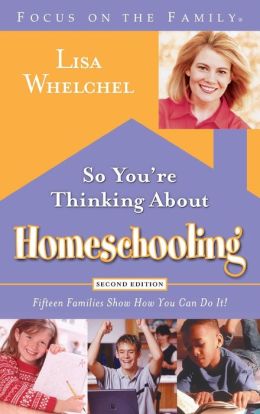
I did what I always do when I need to know more about something. I bought a book, and I spent a ridiculous amount of time Googling. What I discovered is what ultimately led us to where we are today.

It's funny how one conversation can change everything.